
Around 6 minutes to read
Published by Serious Sports Training Academy
At a glance
- Sports massage is a hands-on service used with active and general populations within practitioner scope.
- A professional appointment includes consultation, consent, communication and records as well as techniques.
- Sports massage is not the same as physiotherapy or medical diagnosis.
- The appropriate service depends on the client, the presentation and the practitioner’s competence.
A practical definition of sports massage
Sports massage is a form of hands-on soft-tissue work commonly used by active people and by clients seeking a structured massage service. Despite the name, a client does not need to be an elite athlete. The practitioner selects an appropriate approach after consultation and works within the limits of their training, competence and insurance.
The term does not describe one fixed routine. The pace, pressure, positioning and techniques may vary according to the reason for attendance, the information gathered and the client’s comfort. Responsible practice avoids guaranteed outcomes and does not use massage as a substitute for medical assessment when that is needed.
What happens during a professional session?
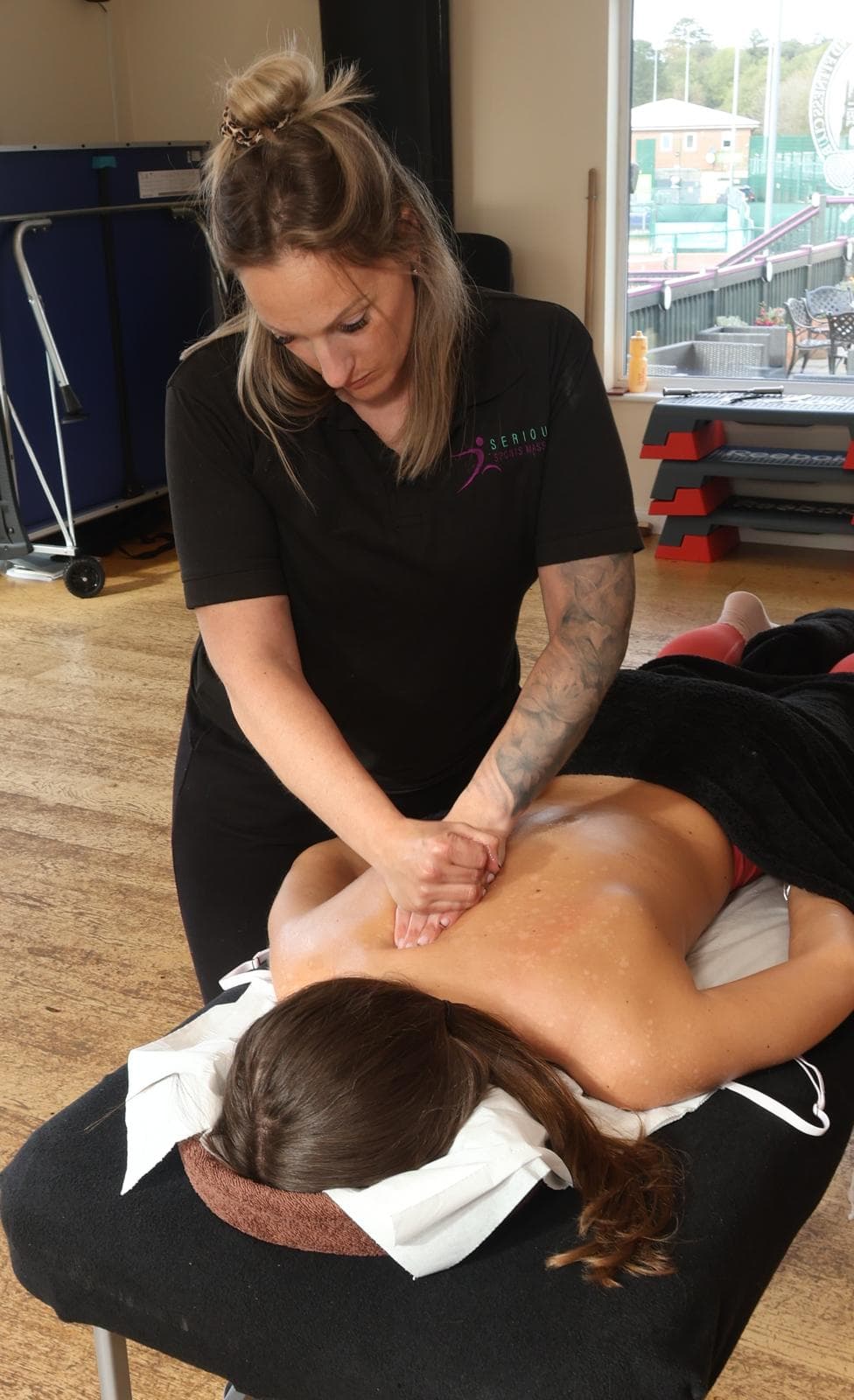
The appointment starts before the treatment couch. A practitioner should gather relevant information, understand the client’s expectations, explain the proposed session, discuss comfort and obtain informed consent. They should also recognise information that may mean treatment needs to be adapted, postponed or referred.
During the hands-on part of the appointment, communication continues. The client should be able to ask questions, comment on pressure and change or withdraw consent. Afterwards, the practitioner may provide appropriate information within scope, record the session and explain any sensible next step without pressuring the client to rebook.
- Professional welcome and relevant consultation
- Explanation of the proposed approach and informed consent
- Suitable positioning, draping, hygiene and comfort checks
- Hands-on techniques selected within practitioner competence
- Accurate records and appropriate follow-up
Techniques are only one part of the service
Training may introduce a range of massage techniques and show learners how factors such as pressure, direction, rhythm and practitioner position affect delivery. Technique names can be useful, but professional judgement is not demonstrated by using the longest possible list.
A safe beginner needs to understand why an approach may be appropriate, how to monitor comfort and when not to proceed. Communication, consultation and body mechanics are therefore taught alongside hands-on practice rather than treated as optional administration.
Who may consider sports massage?
Clients may include recreationally active people, gym members, runners, cyclists, people with physically demanding routines and others looking for a professional massage appointment. The word “sports” describes the discipline; it does not create a requirement to compete.
Suitability cannot be decided from a marketing page alone. A practitioner should consider the individual consultation, their own scope and any reason to seek another professional opinion. Claims to diagnose, cure or fix injuries should be treated cautiously, particularly when they exceed the practitioner’s qualification.
Sports massage compared with related services
Different services can overlap in the language they use, so the provider’s qualifications and scope are more useful than a label alone.
Scroll sideways to compare the columns. Row labels stay visible.
| Service | Typical emphasis | Important distinction |
|---|---|---|
| Sports massage | Structured soft-tissue massage for suitable clients, often connected with activity and recovery routines | The practitioner must remain within their qualification and should not imply medical diagnosis |
| General or relaxation massage | Comfort, relaxation and a general massage experience | Training and service design vary, so ask what is included |
| Physiotherapy | Assessment and management by a regulated healthcare profession | A sports massage qualification is not a physiotherapy qualification |
| Strength and conditioning or personal training | Exercise coaching, programming and physical preparation | Requires its own relevant competence and is not replaced by massage training |
Why professional scope matters
Scope describes the work a practitioner is educated, competent and appropriately insured to perform. It protects the client and gives the practitioner a framework for deciding when to continue, adapt, postpone or refer. Scope is shaped by the exact qualification and by the practitioner’s subsequent development; it is not expanded by confident marketing language.
At Level 3, learners build a professional foundation. They should not present themselves as diagnosing conditions or treating acute and post-acute injuries beyond that foundation. More advanced learning does not remove the need for judgement, referral and honest communication.
What sports massage training should develop
Good training connects anatomy and professional knowledge to observed practical work. Learners need opportunities to watch demonstrations, practise with appropriate consent, receive specific tutor feedback and repeat corrected techniques. They also need to practise complete scenarios rather than isolated hand movements.
A Level 3 course should make assessment and scope visible from the beginning. Before enrolling, ask for the exact qualification, delivery format, practical timetable, group size, assessment approach, complete fee and support arrangements.
- Relevant anatomy and movement knowledge
- Consultation, consent and professional boundaries
- Contraindications, scope and referral decisions
- Safe practical technique and practitioner positioning
- Client communication, records and reflection
Is it a suitable career direction?
Sports massage can suit people who enjoy practical learning, professional client contact and continuous development. It also requires reliability, physical awareness and a willingness to handle records, boundaries and business tasks. Enjoying sport is not enough on its own, and you do not need to arrive as an anatomy expert.
If the work appeals to you, compare the Level 3 training route with evidence. Look beyond course slogans and ask how practical confidence is actually developed.
Common questions
Frequently asked questions
Do you have to be an athlete to have sports massage?
No. The service may be relevant to a range of active and general clients, subject to an individual consultation and the practitioner’s scope.
Is sports massage the same as physiotherapy?
No. Physiotherapy is a regulated healthcare profession with a different education and scope. A sports massage qualification does not make someone a physiotherapist.
Can a sports massage therapist diagnose an injury?
A sports massage practitioner should not claim diagnostic authority they do not hold. They should work within their qualification and refer when a presentation requires another professional assessment.
What should I check before booking a sports massage?
Check the practitioner’s relevant qualification, insurance, service description, location, price, privacy information and approach to consultation and consent.
Continue researching